
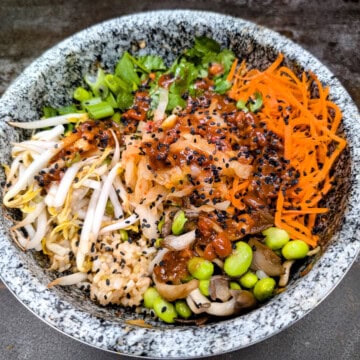
Imagine a colorful symphony of flavor with a variety of delicious vegetables, savory proteins, and amazing Korean-flavored sauces, all served over a bed of warm rice. Bibimbap is a flavor explosion in every bite!
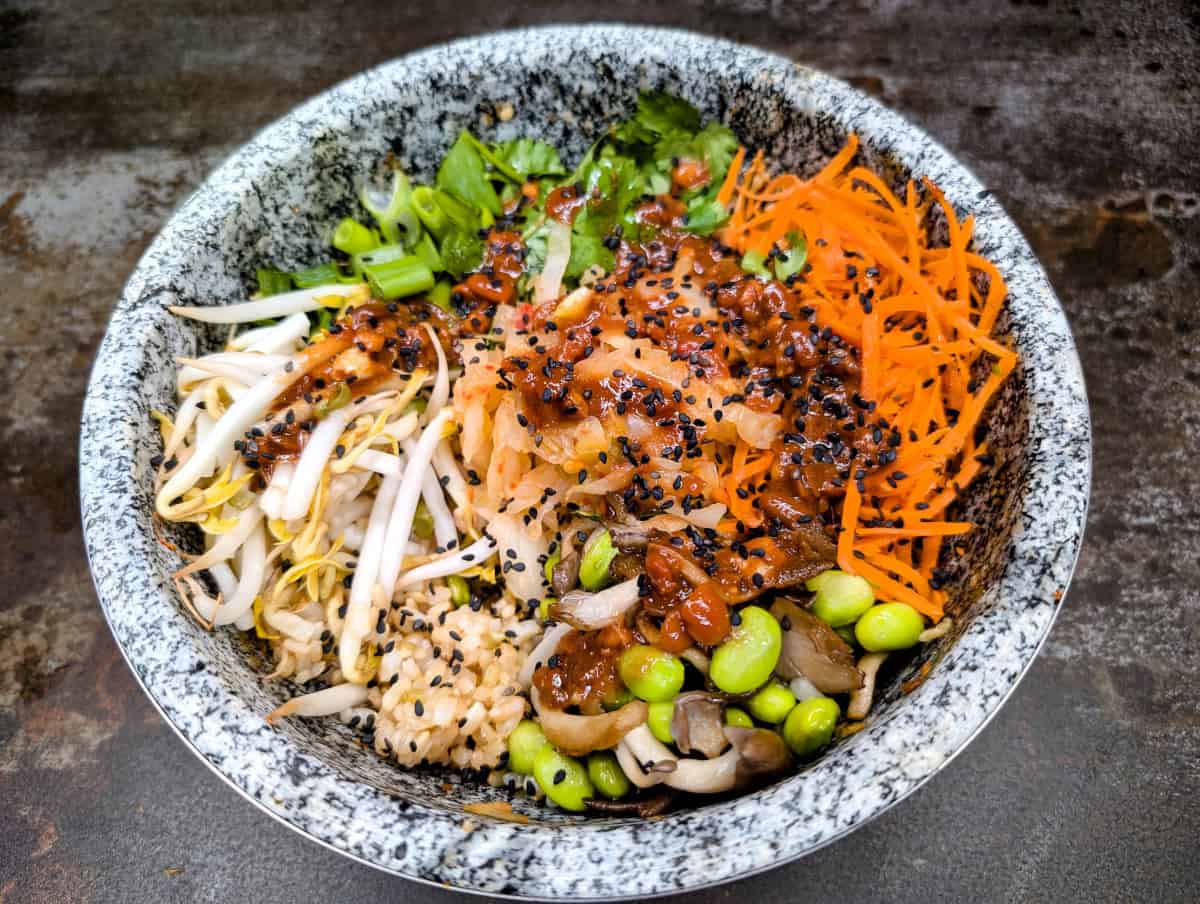
The word bibim is Korean for mixed, and bap is rice. Bibimbap is an amazing Korean dish which takes rice, assorted veggies, and, in our case, tofu, edamame, Soy Curls, or some other substantial protein source for a dish infinitely malleable and delicious!
This recipe for Bibimbap is supposed to be just a starting off point, check out Variations to see how you can make this dish into so many fantastic possibilities. It may look hard, but it can be as easy or as complicated as you want to make it!
A great sauce can really elevate any dish! Try Bibimbap with Doenjang Sauce, Gochujang Sauce, or Yak Gochujang Sauce.
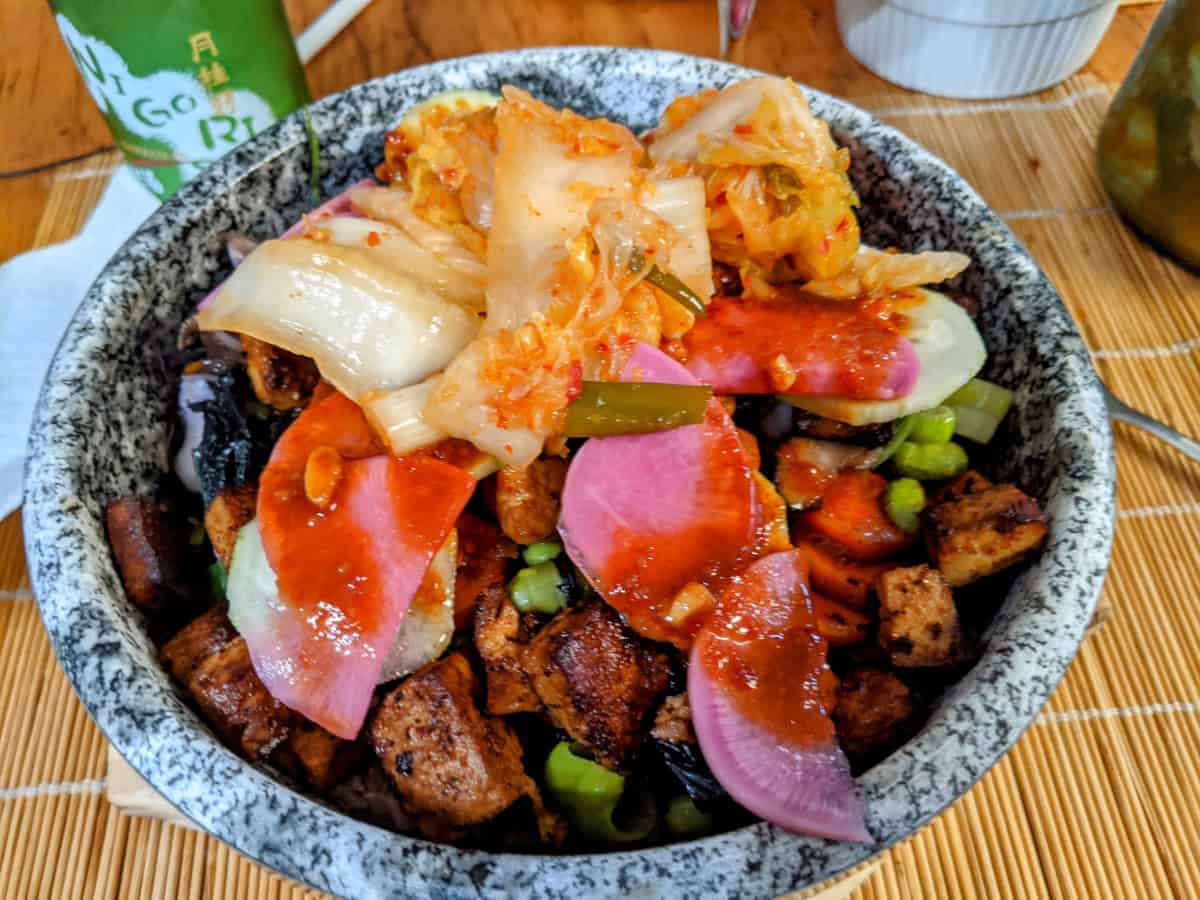
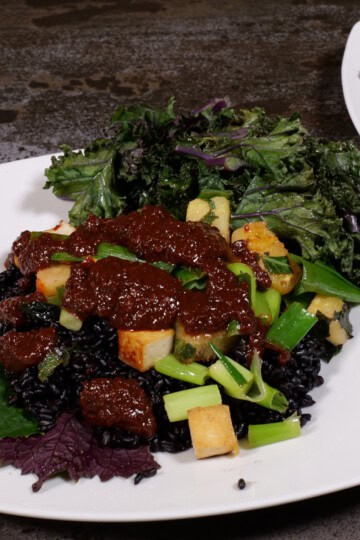
Here is another Bibimbap with marinated, seared tofu, daikon radishes, and cucumber! Bibimbap is so very versatile.
Ingredients
- Rice
- Mushrooms
- Edamame
- Mung Bean Sprouts
- Kimchi
- Carrots
- Cilantro
- Scallions
See recipe card for quantities.
The basis of any bibimbap is rice!
Mushrooms are here to give a nice umami. Shiitakes were used here, though any mushroom can work well.
Edamame was included to boost the protein in the Bibimbap and give a nice texture contrast with everything else.
Mung bean sprouts provides some crunchy texture, a nutty flavor, and lots of nutrients.
I love the tang and zing of kimchi!
Carrots provide crunch and color and I wanted to try out my new julienne peeler!
Instructions
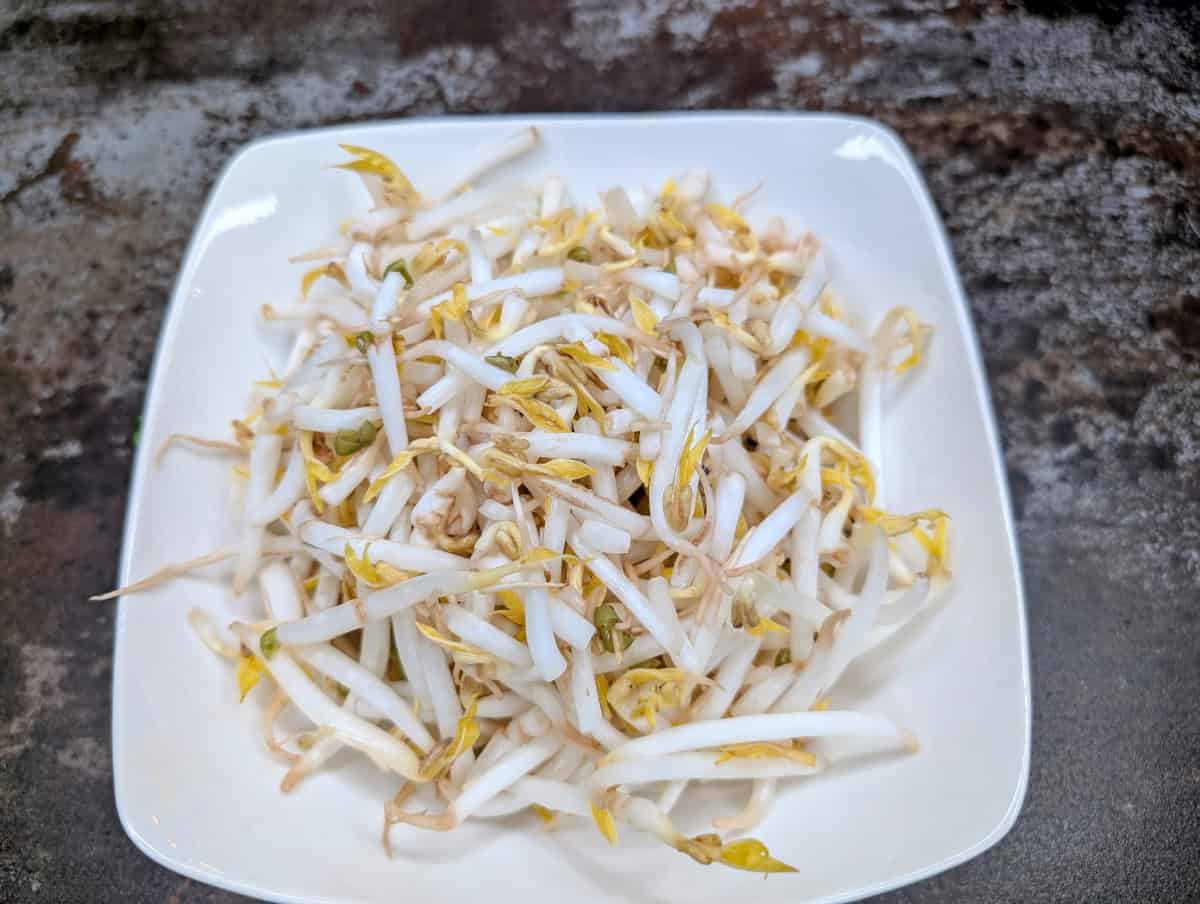
Step 1: Measure out and prepare the mung bean sprouts, deciding whether to cook them or add them raw
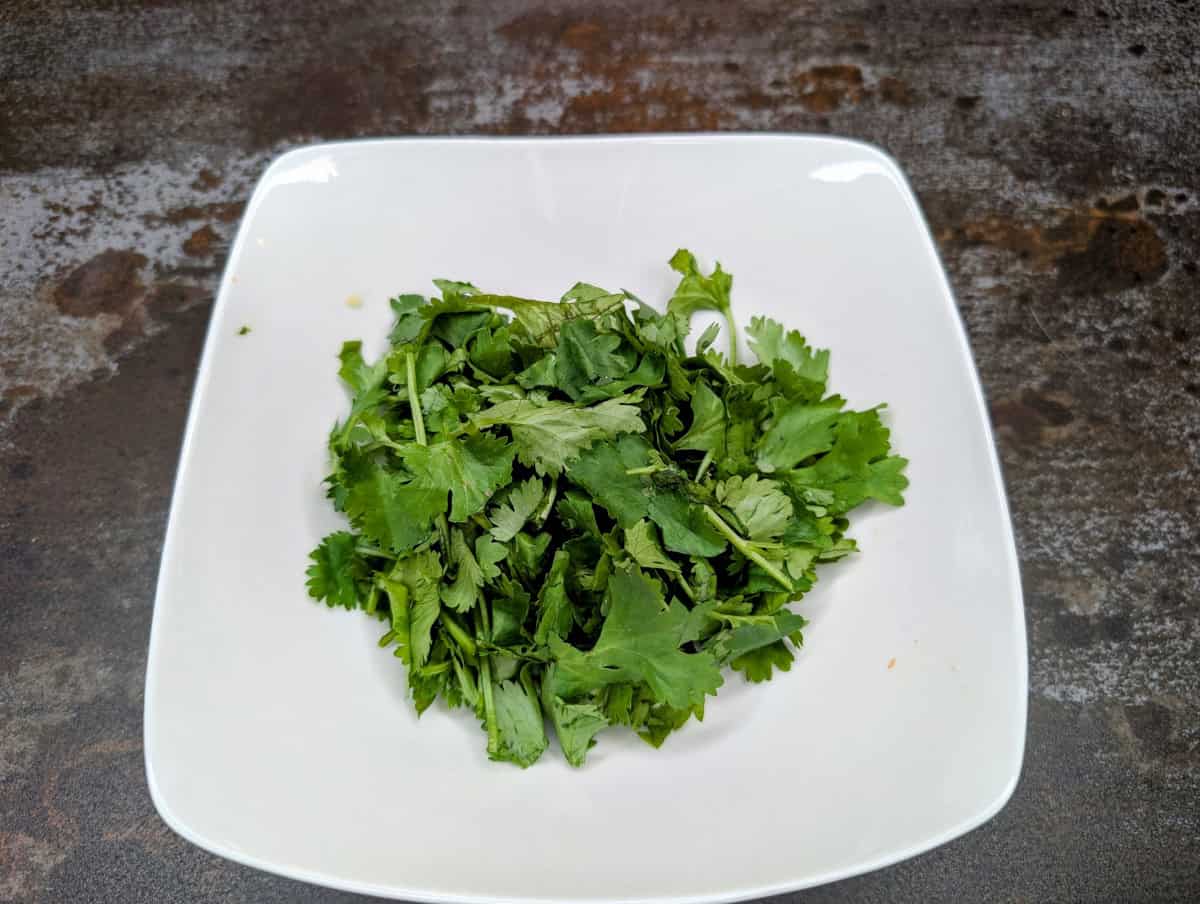
Step 2: Chop the cilantro
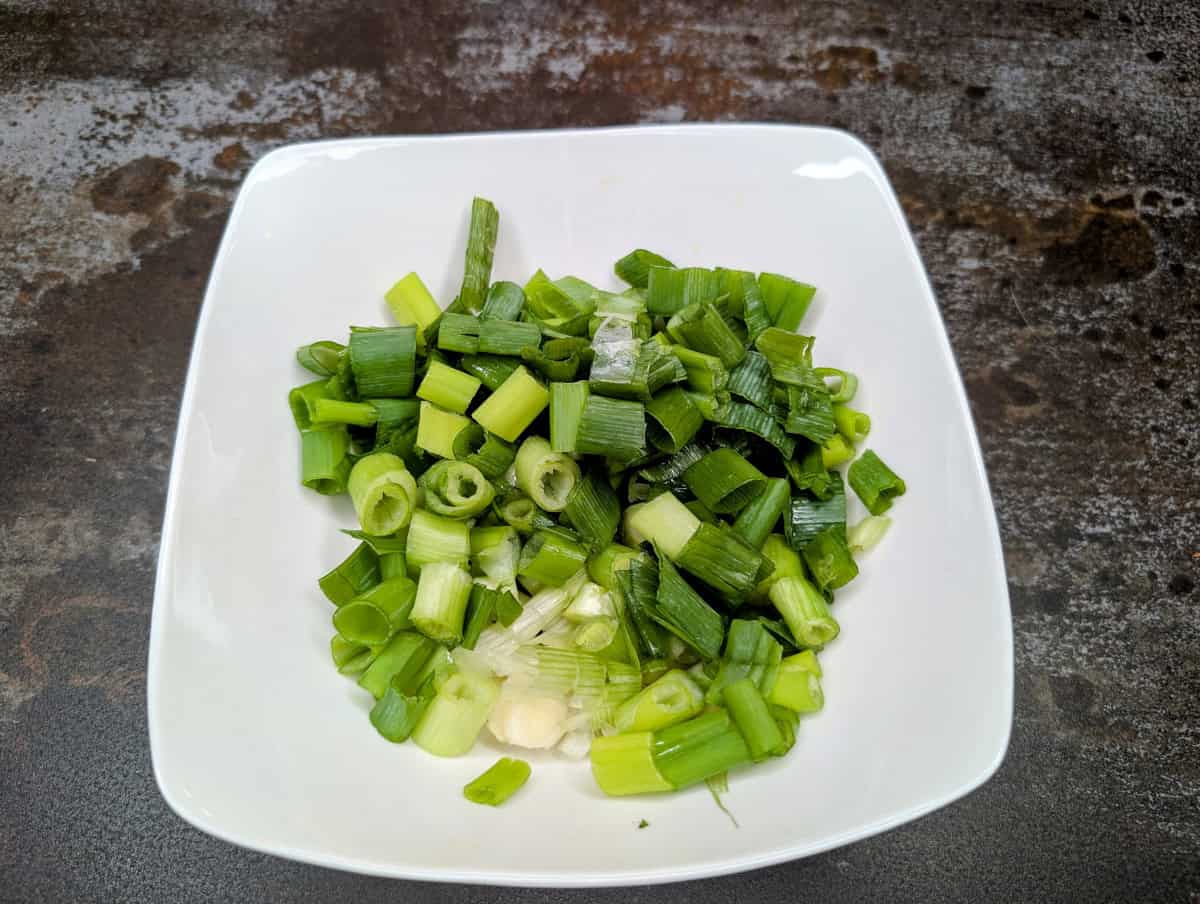
Step 3: Chop the scallions into the desired size and shape
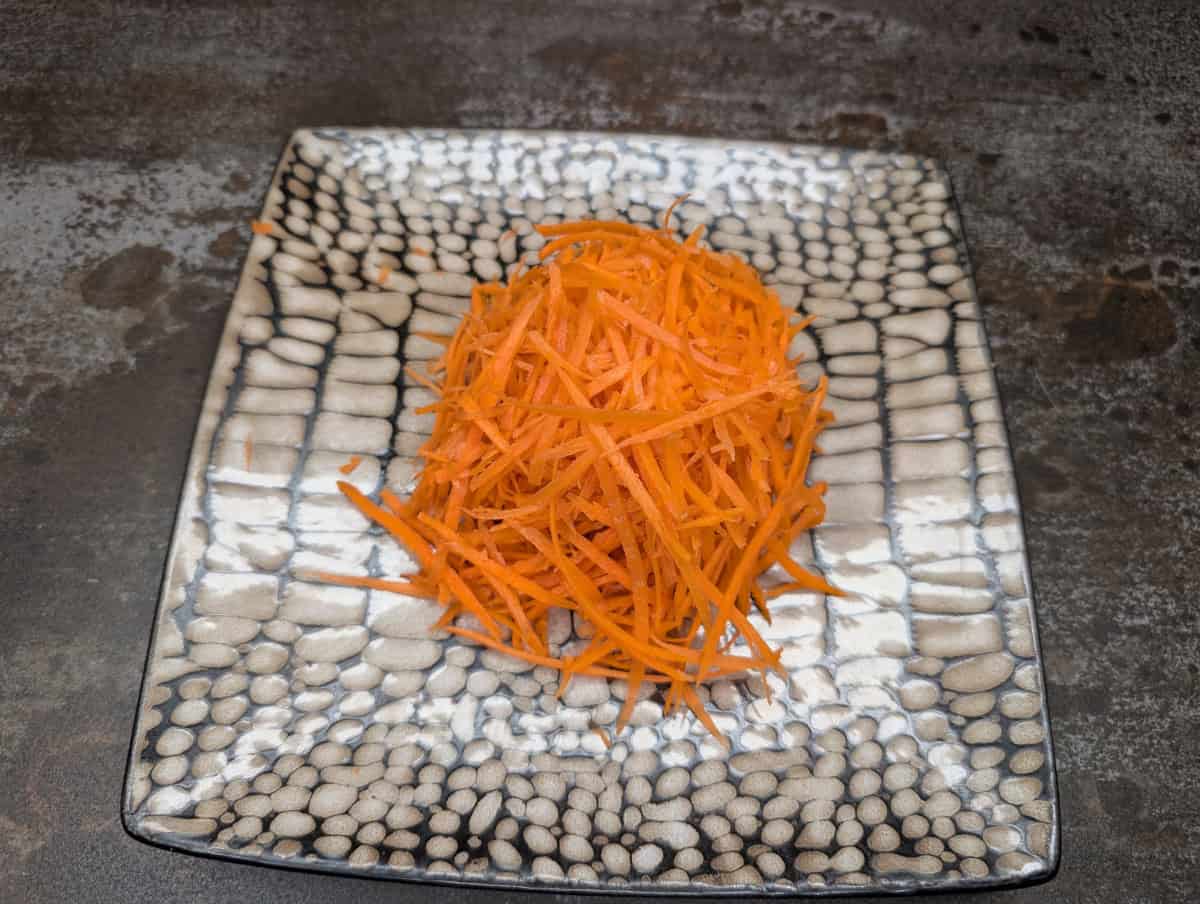
Step 4: Prepare the carrots, whether julienned as pictured, or perhaps in thin coins

Step 5: Measure out the kimchi
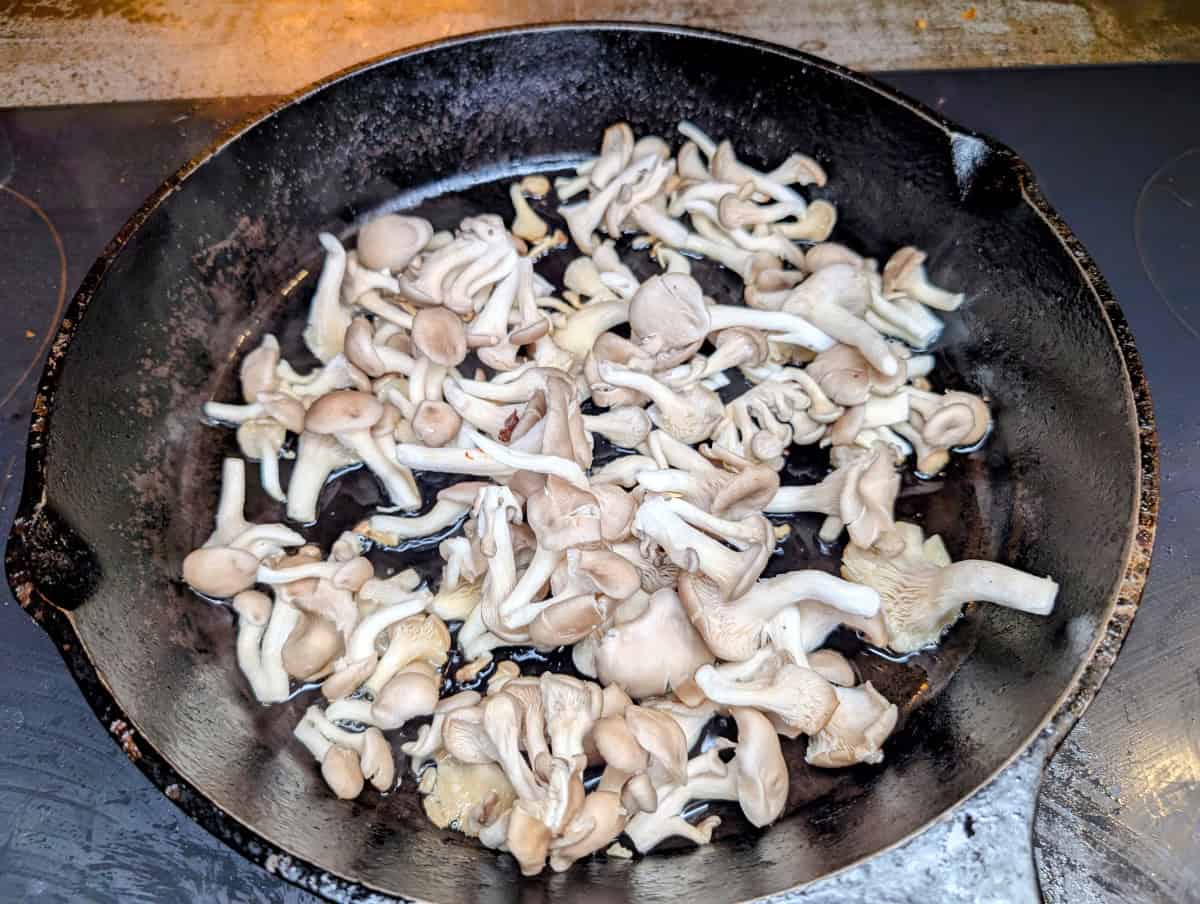
Step 6: Heat the pan until hot, add the oil. When shimmering, add the mushrooms
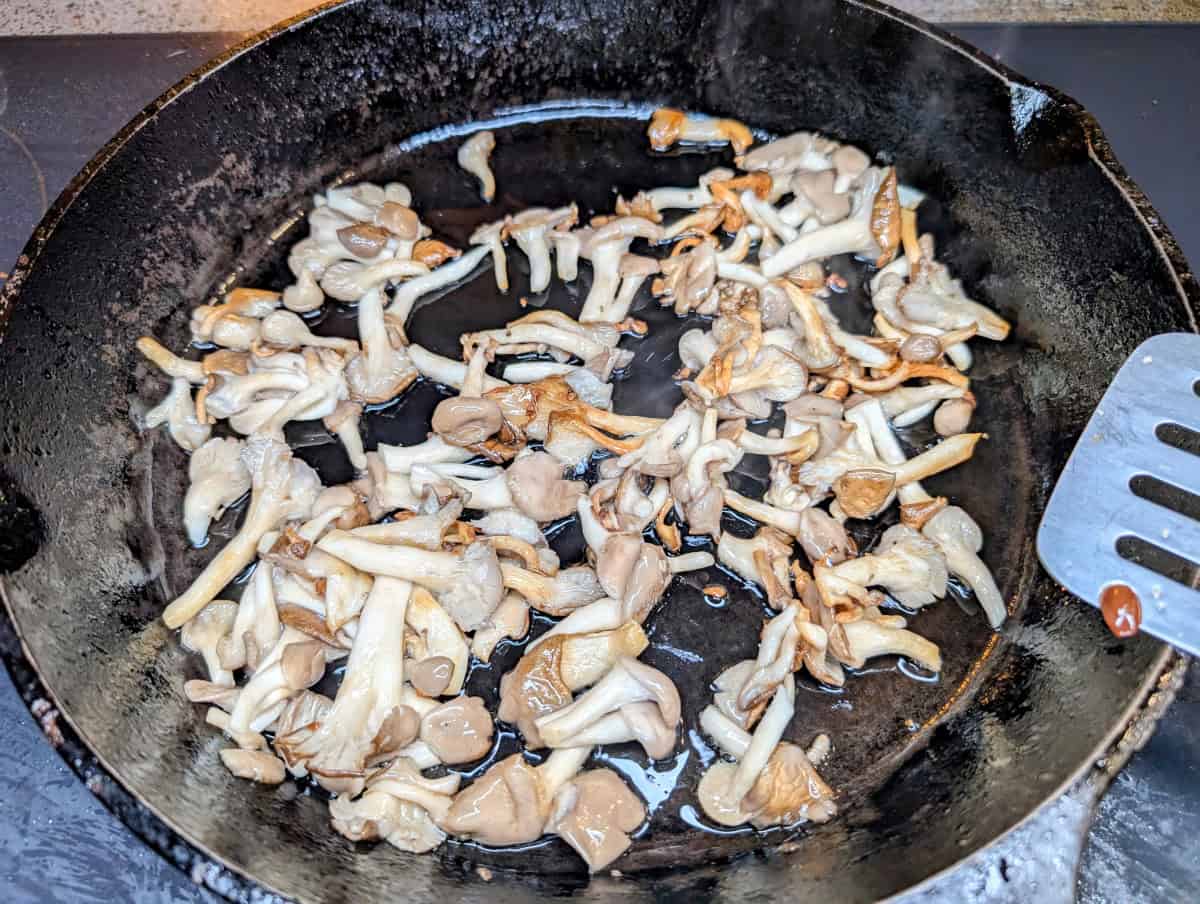
Step 7: Cook the mushrooms until tender and brown
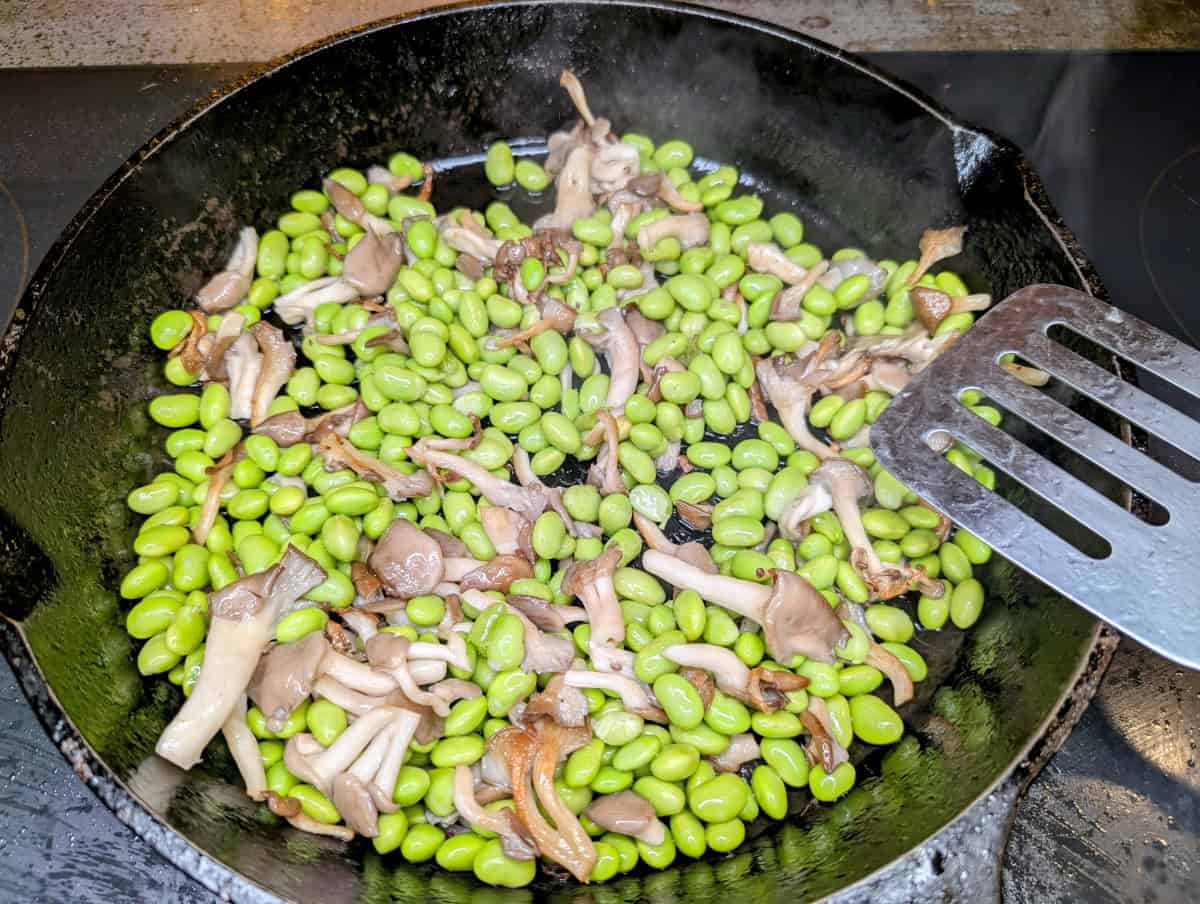
Step 8: Add in the edamame, cook until hot and tender, perhaps a bit seared
One thing not discussed above is the rice! The rice could just be cooked and served as is. Bibimbap is often served where the rice is crunchy on the bottom. The best way to achieve this is with a bowl you can place on the stovetop or an oven. I have some stone bowls I bought specifically for crisping rice as part of Bibimbap. The inside of the bowl is covered with a thin layer of oil and the rice is placed in the bowl. It is then placed in the oven at 400 degrees F or on a stovetop until the rice begins to crackle.
If you do give the rice a satisfying crunch, you can choose to add in the rest of the Bibimap ingredients before crisping the rice, or after. The more juices in the ingredients will mean the rice has a harder time crisping, so perhaps prepare the bowls and rice first and add in the other fillings afterwards.
Variations
Bibimbap is the ultimate dish for variations! The current recipe is to just get your imagination primed, but there is so much you can do to vary it!
Marinate some tofu, and pan sear it. Cook up some Butler's Soy Curls, browning them in a pan. Add an Indonesian flair and chop tempeh into small cubes and pan sear the cubes and add them to your bowl.
The veggie additions are endless. Chop up some daikon radishes. Potentially marinate the daikons in rice vinegar and sesame oil ahead of time. Chop any bell peppers, green, yellow, red, or a combination of them all to make a color sensation. Add chunks of red onion. Julienned zucchini, or cut into coins would be awesome. Depending on how you want the Bibimbap to be, these vegetables can be added raw, blanched, or sautéed, depending on what texture you are after.
You can also add some greens to the Bibimbap. Spinach would be amazing. You can add it raw, chopped into small pieces, or sautéed with garlic and sesame oil. Other greens like kale or chard would also be awesome. I would cut these into small slivers.
Cucumber would make an excellent addition, adding some crisp and some coolness to a hot dish.
Bibimbap is often served with an egg on top. You can use Just Egg or even make a mung bean scramble to give yourself the egg experience.
So far, this Bibimbap has not been a spicy dish. Add some jalapeños or perhaps Fresno chilis that have been pickled for a couple of hours in rice vinegar.
You can chose to not assemble the bowl ahead of time and just provide all of the ingredients in an assembly line and let folks chose what they want in their Bibimbap.
Equipment
- Skillet
- Chopping knife
- Julienne peeler, optional, if want julienned carrots
- Bowls for the toppings to be placed on the table
Storage
The components of the Bibimbap should keep for 2-3 days in the fridge. I often mix all of the ingredients together and eat it as a giant mess for the following meals.
Bibimbap with lots of veggies or sprouts will not necessarily stand up well to freezing. The various components, like the cooked edamame and mushrooms, could be frozen, but the herbs and sprouts would not be at their peak.
Related
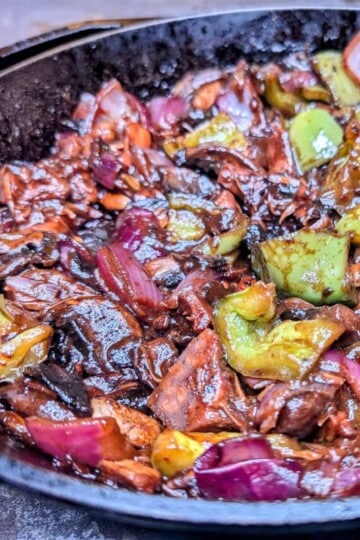
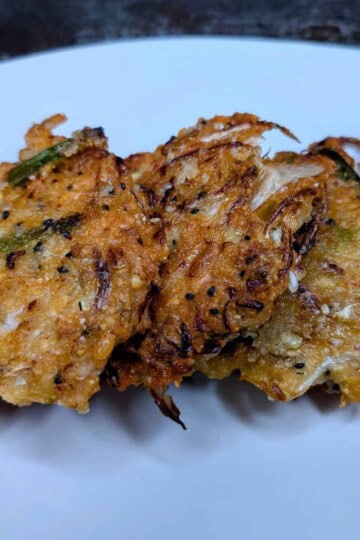
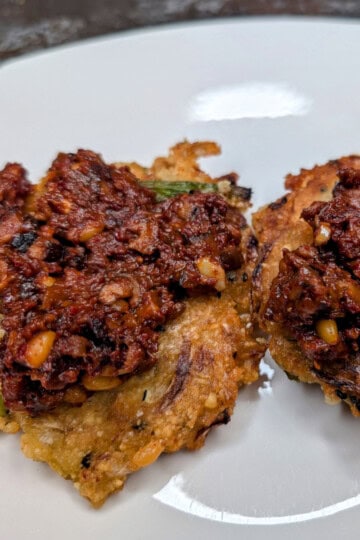
Looking for other Korean-inspired recipes like this? Try these:

Pairing
These are my favorite dishes to serve with Bibimbap:
Recipe
Bibimbap
Equipment
- 1 Skillet
- 1 chopping knife
- 1 Julienne peeler, optional, if want julienned carrots
- Bowls for the toppings to be placed on the table
Ingredients
- 2 cups rice dried
- 10 ounces mushrooms I used shiitake, though any mushroom will work
- 12 ounces edamame
- 8 ounces mung bean sprouts
- 1 cup Kimchi
- 6 scallions
- ½ cup cilantro
- 6 ounces carrots
- black sesame seeds for serving
Instructions
- Start the rice cooking. I used brown rice, which takes about 45 minutes to cook, even if cooked in an Instant Pot.
- Decide if you want the mung beans to be raw, blanched, or fried. If blanching, bring a pan of water to a boil, add the mung beans to the boiling water for 2 minutes. Drain and immediately rinse in cold water.
- Measure and chop the kimchi, scallions, cilantro and carrots.
- Heat up a skillet over medium heat. Once hot, add oil to the pan. Once the oil is shimmering, add the mushrooms.
- Cook the mushrooms until tender, about 5 minutes.
- Add in the edamame to the mushrooms. Cook until hot, about 5 minutes. If you want the edamame seared, up the heat to medium high.
- You can add the mung beans if you want them sautéed. Cook for an additional 2 minutes.
- If serving buffet style, place the chopped vegetables and the contents of the skillet into separate bowls. If assembling the bowls, you can start with rice on the bottom and layer the veggies. I will often put each component in its own mound on the rice. The black sesame seeds can be left on the side for folks to add to their bowl.
- Enjoy!
Comments
No Comments